Calculating compensational stacking
Calculate compensational stacking.
import numpy as np
import matplotlib.pyplot as plt

import sandplover as spl

import matplotlib.animation as animation
from matplotlib.gridspec import GridSpec

import matplotlib
import pandas as pd
import xarray as xr

golfcube = spl.sample_data.golf()
golfstrat = spl.cube.StratigraphyCube.from_DataCube(golfcube, dz=0.05)

# do a single demonstration that it works for simple section
strike_section = spl.section.StrikeSection(golfstrat, distance=3000)
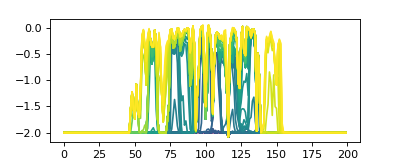
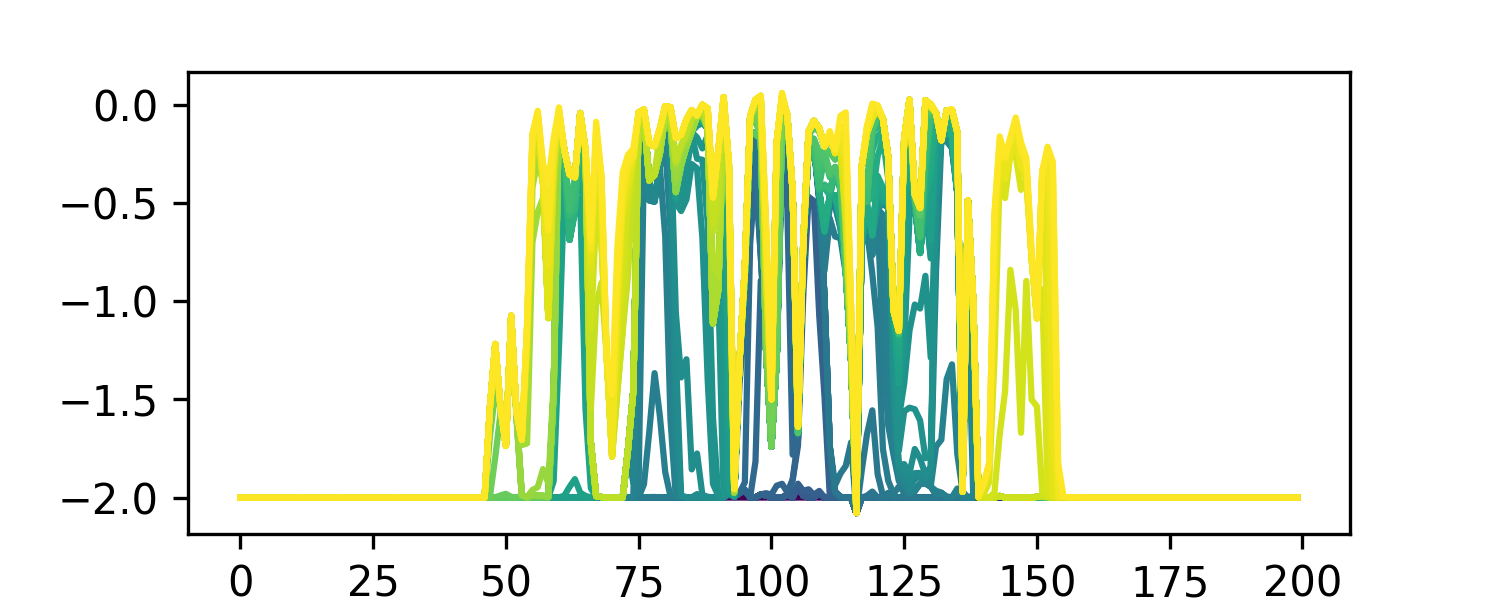
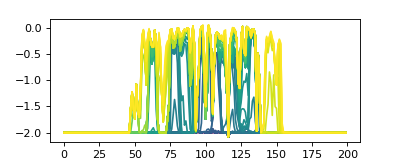
strike_section_stratal_surfaces = golfstrat.strata[:, 40, :]

# show the section
cmap = matplotlib.colormaps["viridis"].resampled(91)
fig, ax = plt.subplots(figsize=(5, 2))
for i in range(91):
    ax.plot(golfstrat.strata[i, 40, :], color=cmap(i))
plt.show()
(Source code, png, hires.png)
# do the computation
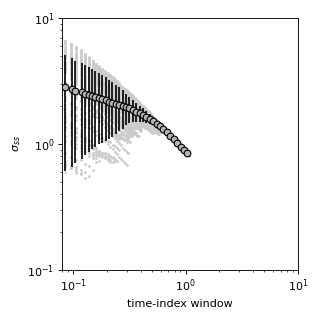
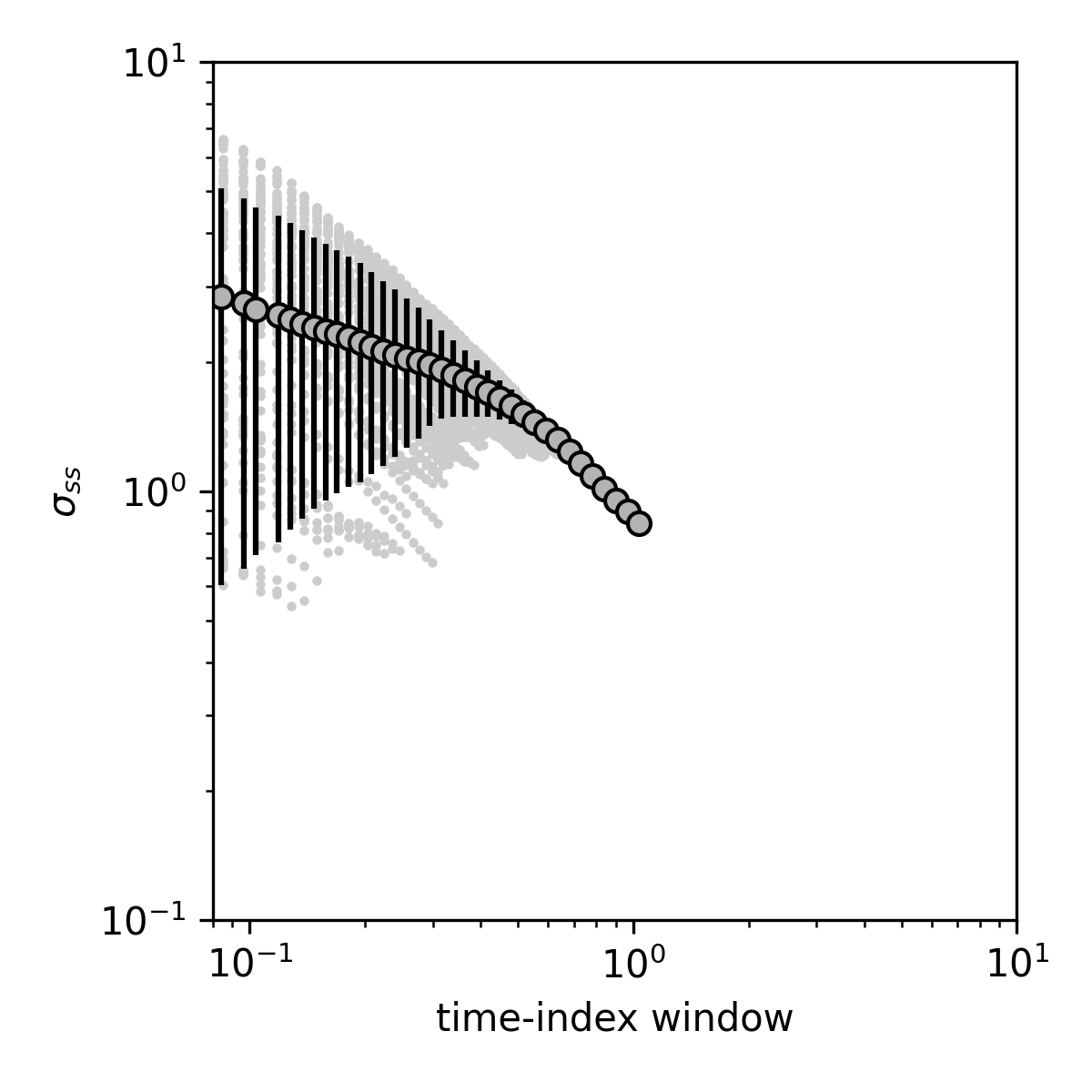
sigmas, etas = spl.strat.compute_compensation(
    strike_section_stratal_surfaces, clip_ends=20
)

# pack the computed results into a long table
df = pd.DataFrame(np.vstack((sigmas, etas)).T)
df.columns = ["sigma", "eta"]


# make a plot
groups = df.groupby(pd.cut(df["eta"], np.logspace(-2, 1, num=100)))
midpt = [(a.left + a.right) / 2 for a in groups.mean().index]
mean_pts_kw = dict(
    mec="0.0", ls="none", mfc="0.7", marker="o", alpha=1, ms=6, ecolor="k"
)

fig, ax = plt.subplots(figsize=(4, 4))
ax.plot(df["eta"], df["sigma"], marker=".", color="0.8", markersize=3, ls="none")
ax.errorbar(midpt, groups.mean()["sigma"], groups.std()["sigma"], **mean_pts_kw)
ax.set_xscale("log")
ax.set_yscale("log")
ax.set_xlim(8e-2, 1e1)
ax.set_ylim(1e-1, 1e1)
ax.set_ylabel("$\\sigma_{ss}$")
ax.set_xlabel("time-index window")
plt.tight_layout()
plt.show()
(Source code, png, hires.png)
Note
The data used in this computation (the golf sample dataset), are from a progradational delta. The compensation timescale is likely difficult to predict accurately in this circumstance. This example is to show the workflow for computing compensational stacking statistics, rather than an actual data analysis.